 Save
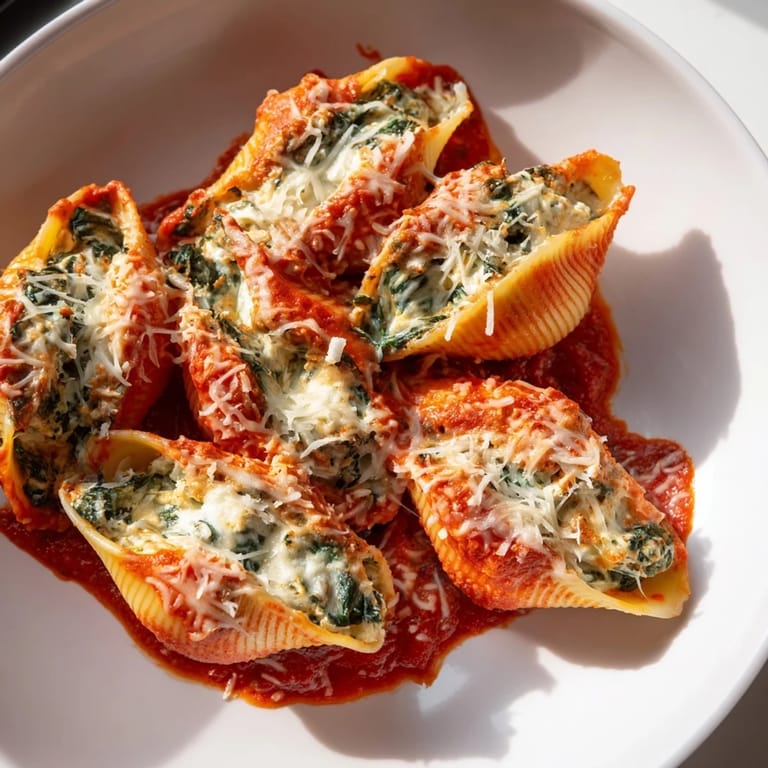
Save There's something about stuffed shells that takes me back to my aunt's kitchen on lazy Sunday afternoons, the smell of tomato sauce simmering on the stove mixing with the earthy sweetness of spinach. I watched her fill those giant pasta shells with such care, almost reverently, as if each one mattered. Years later, I realized she was teaching me that the best Italian food isn't about fancy techniques—it's about taking time with simple, honest ingredients and letting them speak for themselves.
I made this for my partner during the first week we lived together, and I accidentally overcooked the shells slightly—they were softer than ideal. Instead of starting over, I just worked more gently when filling them, and something magical happened: they held together perfectly without being tough, and the whole dish felt more cohesive somehow. That small mistake taught me that cooking isn't about perfection; it's about adjusting and trusting the process.
Ingredients
- Jumbo pasta shells: These large conchiglioni are specifically designed for stuffing and hold the filling without breaking—don't substitute with regular shells or they'll shatter.
- Ricotta cheese: The star of the filling, but make sure it's the regular kind from a good source; some brands are too watery and will make the filling loose.
- Frozen spinach: Squeeze it dry in a clean kitchen towel until no liquid drips out, otherwise your filling becomes mushy and watery.
- Eggs: Acts as a binder to keep everything together during baking, ensuring the filling doesn't fall apart.
- Ground nutmeg: A small amount transforms the filling from good to unforgettable—don't skip it or overdo it.
- Tomato passata: Smoother and more refined than canned tomatoes, it creates a silky sauce that coats every shell beautifully.
- Mozzarella cheese: Use whole milk mozzarella if you can find it; it melts more evenly and gets that gorgeous golden top.
Tired of Takeout? 🥡
Get 10 meals you can make faster than delivery arrives. Seriously.
One email. No spam. Unsubscribe anytime.
Instructions
- Heat the oven and prepare:
- Set your oven to 180°C (350°F) so it's ready when you are. This temperature is gentle enough to warm everything through without drying out the cheese topping.
- Cook the shells al dente:
- Bring a large pot of salted water to a rolling boil, then add the jumbo shells and cook for about 2 minutes less than the package says. You want them tender but still slightly firm because they'll soften more in the oven. Drain immediately and spread them on a tray in a single layer so they don't stick together.
- Make the creamy filling:
- In a bowl, combine the ricotta, squeezed-dry spinach, Parmesan, egg, minced garlic, nutmeg, salt, and pepper. Mix gently until smooth and no lumps of ricotta remain—you're looking for a spreadable consistency that holds together.
- Build the tomato sauce:
- Heat olive oil in a saucepan over medium heat, add your finely chopped onion, and let it soften for about 3 minutes, stirring occasionally so it doesn't brown. Add the minced garlic and cook for just 1 minute more until fragrant, then pour in the tomato passata, oregano, and basil. Taste it and adjust salt and pepper to your liking, then let it simmer gently for 10–15 minutes so the flavors meld.
- Assemble the dish:
- Spread about half of your tomato sauce across the bottom of a large baking dish—this prevents sticking and creates a flavorful base. Fill each cooked shell with about 1.5–2 tablespoons of the ricotta mixture using a small spoon, then arrange them snugly in the dish. Spoon the remaining sauce over top, making sure every shell gets kissed with tomato goodness.
- Top and cover:
- Scatter the shredded mozzarella evenly over the shells, then sprinkle the remaining Parmesan on top for extra richness. Cover the whole dish tightly with foil, which traps steam and keeps everything moist during the first phase of baking.
- Bake and finish:
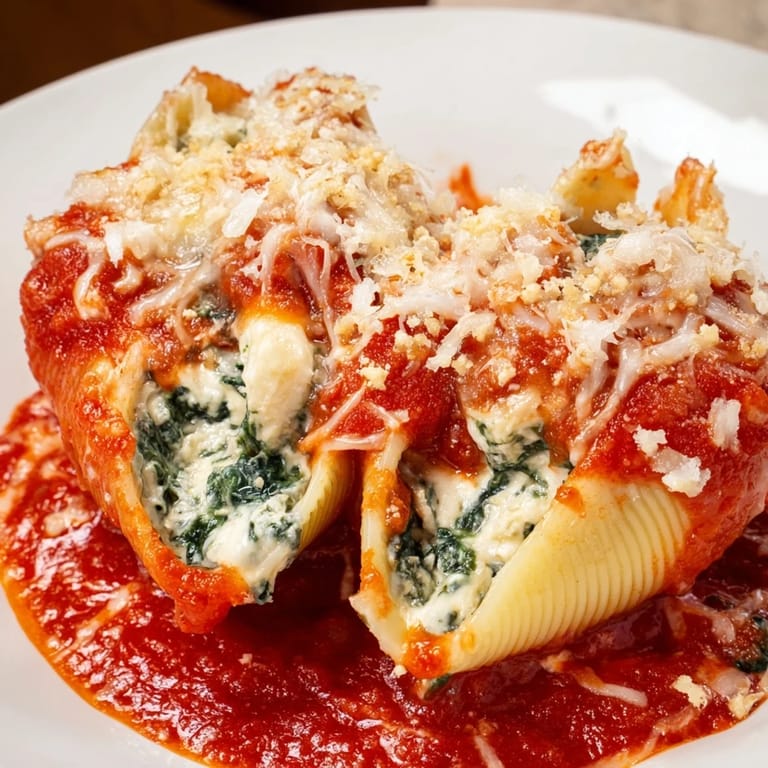
- Bake covered for 25 minutes, then remove the foil and bake for another 10–15 minutes until the cheese on top is bubbling at the edges and turning golden brown. Let it rest for 5 minutes before serving—this allows everything to set slightly so the shells stay intact when plated.
 Save
Save Last Christmas, my family sat around the table passing this dish around, and my grandmother—who's cooked Italian food her whole life—asked for my recipe. That moment meant more to me than any compliment; it reminded me that food is how we show love across generations, how we say 'you matter to me' without words. Watching people eat something you made with care changes how you cook forever.
Why This Dish Works
Stuffed shells succeed because they balance richness with brightness—the creamy filling inside provides comfort while the tomato sauce cuts through with acidity and freshness. The two cook at different rates, which is why we cover the dish first; the shells warm through gently while the ricotta stays tender, and then the uncovered phase lets the cheese top develop that essential golden crust. It's a dish that respects your effort but rewards you generously.
Making It Your Own
While this recipe is beautiful as written, I've found that cooking is deeply personal, and small adjustments make it yours. Some people add a handful of fresh basil to the filling, others mix in a beaten egg more thoroughly for a lighter texture, and some swear by adding a tiny pinch of red pepper flakes to the tomato sauce for subtle heat. The formula stays the same, but the personality changes.
Serving and Storing
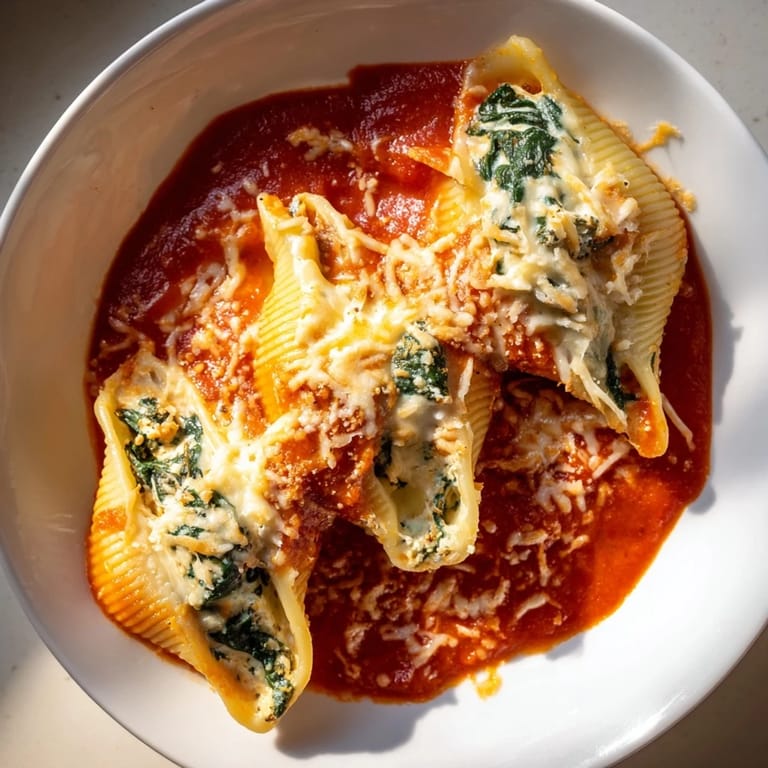
This dish is best served hot from the oven when the cheese is still bubbling, though it reheats beautifully in a 160°C oven covered with foil. I've found that leftovers actually taste better the next day as the flavors deepen and marry together. It pairs wonderfully with a simple green salad dressed with lemon vinaigrette and a light red wine like Chianti, which cuts through the richness without overwhelming the delicate filling.
- Store leftovers in an airtight container in the fridge for up to 3 days, or freeze for up to 2 months before reheating.
- Don't add extra sauce when reheating; the shells release liquid as they warm, and you don't want it swimming.
- For a lighter version, substitute half the ricotta with Greek yogurt, though the filling becomes slightly more delicate during baking.
 Save
Save There's quiet joy in a dish this satisfying, this honest, this rooted in tradition yet made by your own hands. Make it with intention, feed people you care about, and watch how food becomes memory.
Recipe FAQs
- → What type of pasta shells work best?
Large jumbo pasta shells (conchiglioni) are ideal as they hold the filling well and maintain their shape during baking.
- → Can fresh spinach be used instead of frozen?
Yes, fresh spinach can replace frozen if wilted and chopped, providing a fresher texture to the filling.
- → How do you avoid watery filling?
Thoroughly squeeze excess water from thawed spinach or wilted fresh spinach to keep the filling creamy and not watery.
- → Is it necessary to prebake the shells?
The shells are boiled briefly until al dente, which softens them just enough to fill without fully cooking before baking.
- → What cheeses are used in the filling and topping?
The filling combines ricotta and Parmesan cheese, while the topping includes mozzarella and additional Parmesan for a golden crust.
- → Can this dish be prepared ahead of time?
Yes, assemble the shells with filling and sauce in advance, then refrigerate and bake before serving for convenience.