 Save
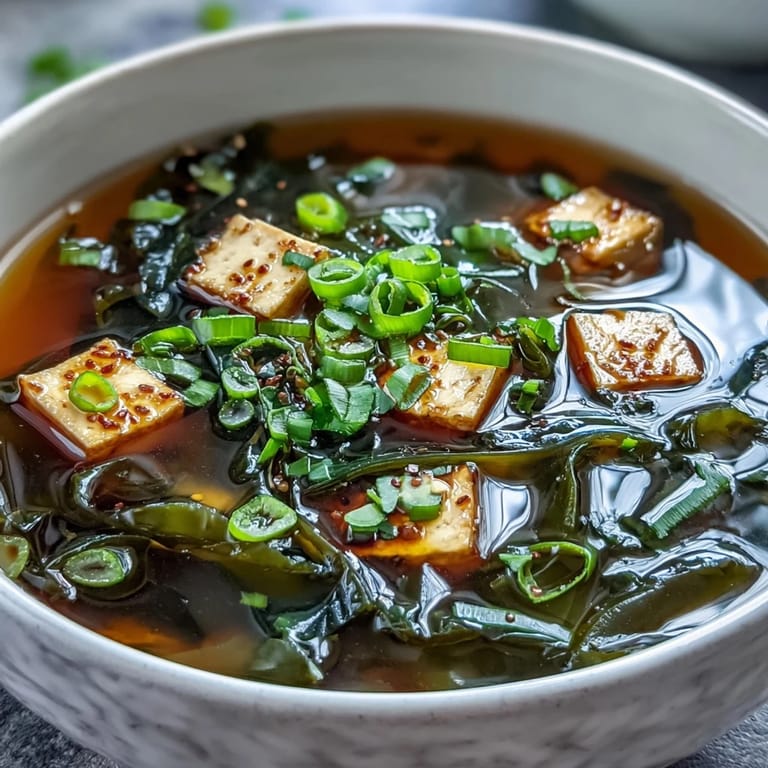
Save My first real miso soup came on a gray morning in a tiny Tokyo apartment, sipped from a ceramic bowl that still felt warm in my hands. The cook—a neighbor who barely spoke English—simply nodded when I asked how she made something so effortlessly comforting. Years later, I realized it wasn't magic; it was restraint. Just a handful of ingredients, each one doing exactly what it needed to do, nothing more. That soup taught me that simplicity isn't boring when every element matters.
I made this for a friend who'd just moved into her first place, still surrounded by cardboard boxes and the smell of fresh paint. She sat at her kitchen counter, spoon in hand, and something in her shoulders just softened. When someone says a bowl of soup made them feel at home, that's when you know you've made something worth repeating.
Ingredients
- Dashi stock (4 cups): This is your foundation—use vegetarian dashi made from kombu and shiitake if you want to keep it plant-based, or reach for the traditional bonito version if you're not avoiding fish.
- White or yellow miso paste (3 tablespoons): Don't skip the quality here; good miso makes all the difference, and the paste dissolves smoothly when you temper it with hot broth first.
- Silken tofu (200 g): Cut into half-inch cubes just before cooking so they stay silky; firm tofu will give you a different texture, so choose based on what you're craving.
- Dried wakame seaweed (2 tablespoons): A quick soak in cold water brings it back to life and keeps it tender, none of that rubbery texture.
- Scallions (2): Slice them just before serving so they stay bright and crisp, adding a small sharp note that wakes up the whole bowl.
Tired of Takeout? 🥡
Get 10 meals you can make faster than delivery arrives. Seriously.
One email. No spam. Unsubscribe anytime.
Instructions
- Start with warmth:
- Pour your dashi into a medium saucepan and set the heat to medium, letting it come to a gentle simmer—you want little lazy bubbles, not an aggressive boil.
- Prepare the seaweed:
- While the stock warms, place the dried wakame in a small bowl of cold water and let it sit for five minutes; you'll watch it unfurl and soften, then drain it well.
- Dissolve the miso:
- Scoop the miso paste into a small bowl and add a full ladle of hot dashi, whisking slowly until it's completely smooth with no lumps hiding anywhere.
- Build the soup:
- Gently add your tofu cubes and drained wakame to the simmering stock, letting them warm through for two to three minutes while you listen for that quiet sizzle.
- Finish with care:
- Remove the pot from heat, then stir in your dissolved miso paste with a gentle hand; never let it boil after the miso goes in, as heat destroys the live probiotics and flattens the flavor.
- Serve and garnish:
- Ladle into bowls, scatter the fresh scallions on top, and serve right away while everything's still steaming and perfect.
 Save
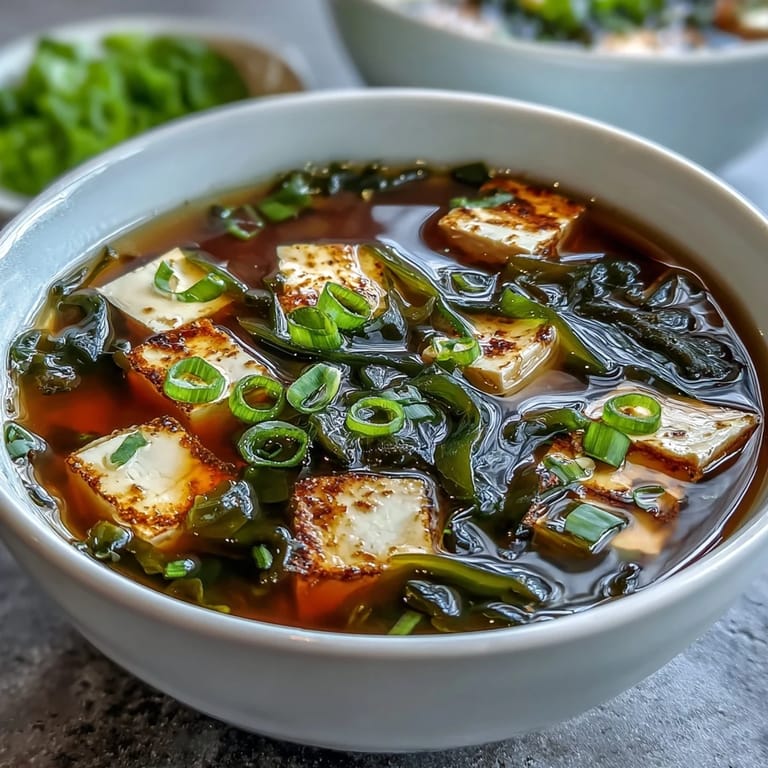
Save There's something almost meditative about the small ritual of making this soup, the way the kitchen fills with that gentle, savory steam. My daughter now asks for it when she's tired or upset, and I've stopped trying to convince her it's more than soup—she already knows.
The Secret to Silky Tofu
Silken tofu is delicate by nature, which is exactly why it belongs in miso soup—it absorbs the broth and becomes part of it rather than staying separate. Cut your tofu right before cooking, use a gentle hand when stirring, and keep the heat low so nothing traumatizes those soft curds. I've found that room-temperature tofu added to hot broth stays softer than cold tofu, so if you remember to let it sit out for a few minutes, you're already ahead.
Playing with Flavors
Once you've made this basic version a few times, you'll start seeing where you can add your own touch without breaking what makes it work. Some days I use a blend of white and red miso for deeper color and slightly more complexity, other times I'll slip in some thinly sliced mushrooms or a handful of spinach that wilts into the broth. The soup is forgiving as long as you respect the core technique—never boil the miso, always temper it first, and taste before you serve.
Making It Your Own
This soup pairs beautifully with steamed rice on the side, or you can serve it alongside a simple green salad for a light meal that feels complete. Think of miso soup as your canvas rather than a rigid formula, something you can adjust based on what's in your kitchen or what your body needs that day. Just remember the fundamentals, and everything else becomes possible.
- For a vegan version, use kombu and shiitake dashi instead of anything with bonito flakes.
- Dried mushrooms, spinach, or even thinly sliced daikon add depth without overwhelming the delicate broth.
- Make extra dashi and freeze it in portions so you can pull together a bowl of soup in under ten minutes whenever you need one.
 Save
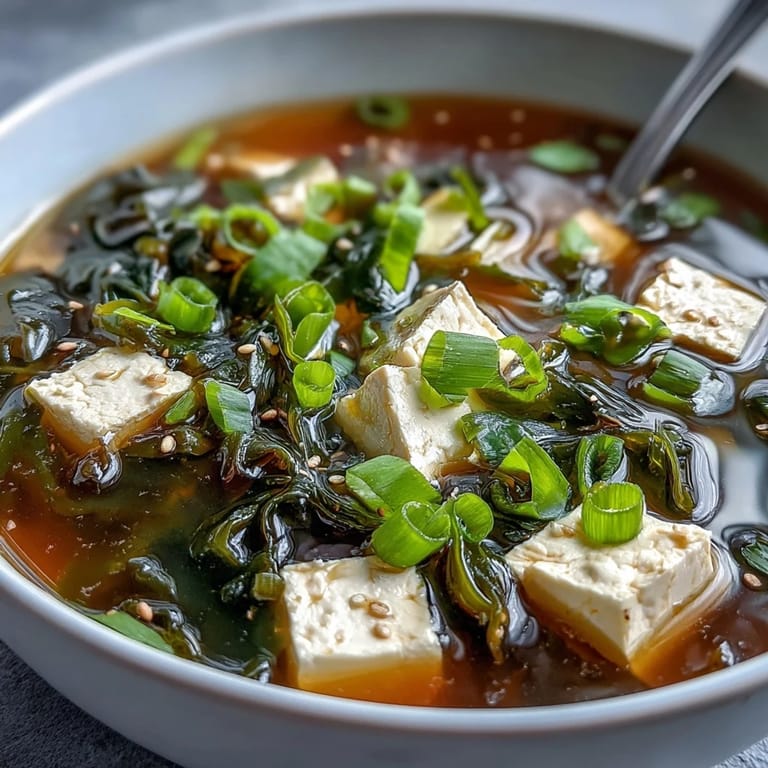
Save Miso soup is proof that the most nourishing meals don't need to be complicated or time-consuming. Make it whenever you need something that feels like it was made just for you.
Recipe FAQs
- → What type of miso works best?
White or yellow miso paste offers a milder, slightly sweet flavor that pairs beautifully with delicate ingredients. Red miso provides a deeper, more intense taste if preferred.
- → Can I make this vegan?
Yes, simply use vegetarian dashi made from kombu seaweed and dried shiitake mushrooms instead of traditional bonito-based stock. Most miso pastes are naturally plant-based.
- → Why shouldn't I boil the miso?
Boiling miso paste destroys its beneficial probiotics and enzymes, while also causing the flavor to become bitter and harsh. Always remove the broth from heat before stirring in the dissolved miso.
- → How do I store leftovers?
Store cooled portions in an airtight container for up to 2 days. Reheat gently over low heat without boiling, as high temperatures will compromise the miso's beneficial properties and delicate flavor.
- → What can I add for variety?
Thinly sliced shiitake mushrooms, fresh spinach, snow peas, or cubed sweet potato make excellent additions. For extra protein, consider adding edamame beans or small shrimp.
- → Is silken tofu necessary?
Silken tofu provides the traditional delicate texture, but firm tofu works if you prefer more substantial cubes that hold their shape better during stirring and serving.