 Save
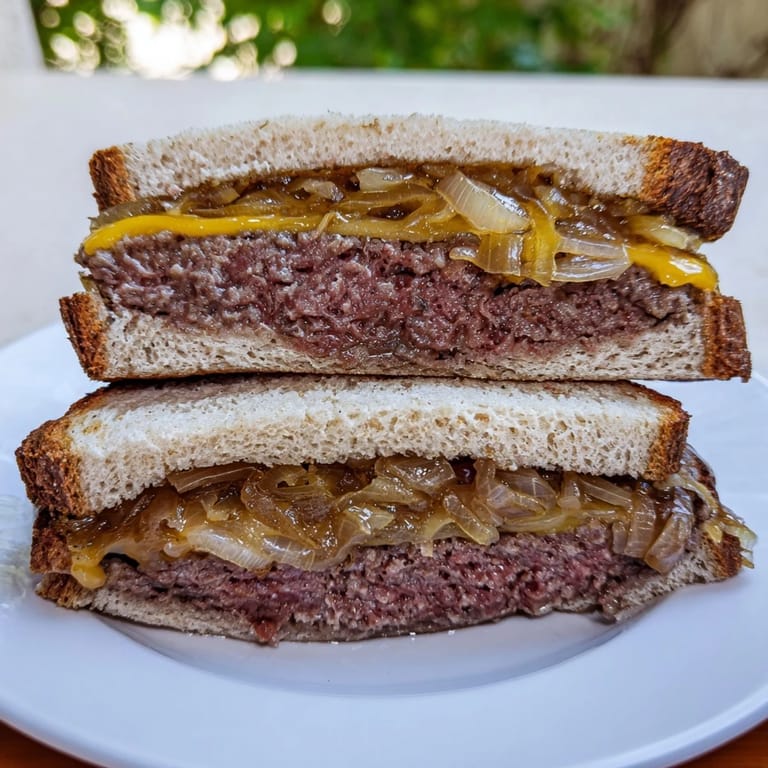
Save There's something about a patty melt that takes me straight back to a rainy Thursday afternoon when my dad decided we needed to skip the usual routine and try making diner food at home. He pulled out two skillets, some rye bread, and a block of Swiss cheese, muttering something about how caramelized onions were the secret ingredient nobody talked about. I watched the onions turn from pale slivers to deep golden ribbons, and honestly, that's when I understood why this sandwich had survived seventy years on diner menus unchanged.
I made these for my college roommates during finals week, and they disappeared so fast I barely got one before the second round went on the griddle. One of them still texts me about that day, swearing it was the turning point in her exam performance. Food shouldn't have that much power, but somehow a really good patty melt does.
Ingredients
- Ground beef (80/20 blend): The ratio matters here—too lean and your patty tastes like gym equipment, too fatty and grease pools around the edges.
- Large yellow onions: They sweeten as they cook, so don't rush this step or substitute red onions, which turn purple and bitter.
- Unsalted butter: Use the good stuff for both caramelizing and spreading; it's worth the few extra dollars.
- Rye bread: The caraway notes complement the beef and onions in a way that makes the sandwich feel more intentional than regular bread.
- Swiss cheese: Its mild, nutty flavor doesn't overpower anything, though American cheese gets creamy in a different, equally valid way.
- Salt and black pepper: Season the meat generously—it's the only chance to season it before it hits the skillet.
Tired of Takeout? 🥡
Get 10 meals you can make faster than delivery arrives. Seriously.
One email. No spam. Unsubscribe anytime.
Instructions
- Start the onions first:
- Melt butter in a large skillet over medium-low heat, add sliced onions and a pinch of sugar, then let them sit and stir occasionally for 20–25 minutes until they're deep golden and almost caramelized. This isn't passive—you're coaxing sweetness out of them.
- Form and season the patties:
- While onions cook, mix ground beef with salt and pepper, then gently shape into 4 thin ovals the size of your bread slices. Don't compress them; treat the meat like it's fragile.
- Cook the beef:
- In a separate skillet over medium-high heat, cook patties 2–3 minutes per side until browned and just cooked through. They'll be thin, so watch them closely.
- Toast the bread:
- Lay out 8 bread slices and spread one side of each with softened butter, keeping the other side clean for condiments if you want them.
- Build the sandwiches:
- On 4 slices (buttered side down), layer cheese, patty, a generous spoonful of onions, then another cheese slice, topped with remaining bread buttered side out. Don't be stingy with the onions.
- Griddle until golden:
- Heat a clean skillet or griddle over medium heat and cook sandwiches 2–3 minutes per side, pressing gently with your spatula. You'll know they're ready when the bread is golden and cheese starts oozing.
- Rest and serve:
- Let them sit for a minute so the cheese sets slightly, then slice in half and serve while they're still steaming.
 Save
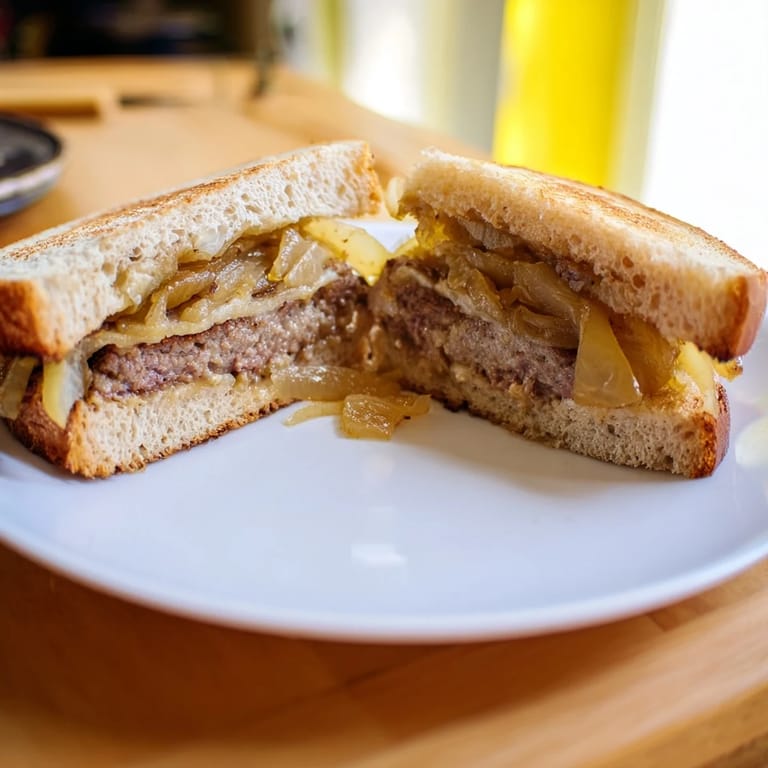
Save I'll never forget my aunt's face when she bit into one and realized the sandwich was warm all the way through, not just the outside. She kept asking how the cheese had gotten so melted, as if I'd discovered something revolutionary instead of just following the most obvious method possible.
Why the Bread Matters
Rye bread has a slight chewiness and caraway notes that make this sandwich feel more intentional than it has any right to be, but sourdough works if that's what you have. The structure needs to be sturdy enough to hold all that butter and cheese without falling apart, so avoid anything too delicate. I've learned this the hard way, more than once.
The Onion Window
Those 20 minutes of onion time is non-negotiable, and it's the move that separates a good patty melt from a forgettable one. There's a moment around minute 18 when they shift from golden to deep amber, and that's when you know they're ready. Too early and they're just soft; too late and they start to burn at the edges.
Serving and Variations
A proper patty melt comes with pickles on the side and maybe some fries, though honestly it stands on its own. The sandwich is filling enough that you don't need much else, but the cool crunch of a dill pickle against the warm, rich sandwich is a combination that just works. Some people add a thin spread of Dijon mustard or mayo to the bread before assembly, which adds a subtle sharpness that balances the richness.
- Swap Swiss for cheddar or American cheese if you want something sharper or creamier.
- Grilled mushrooms tucked in with the onions add earthiness without changing the core identity of the sandwich.
- If you're serving a crowd, caramelize onions ahead of time and reheat them gently before assembly.
 Save
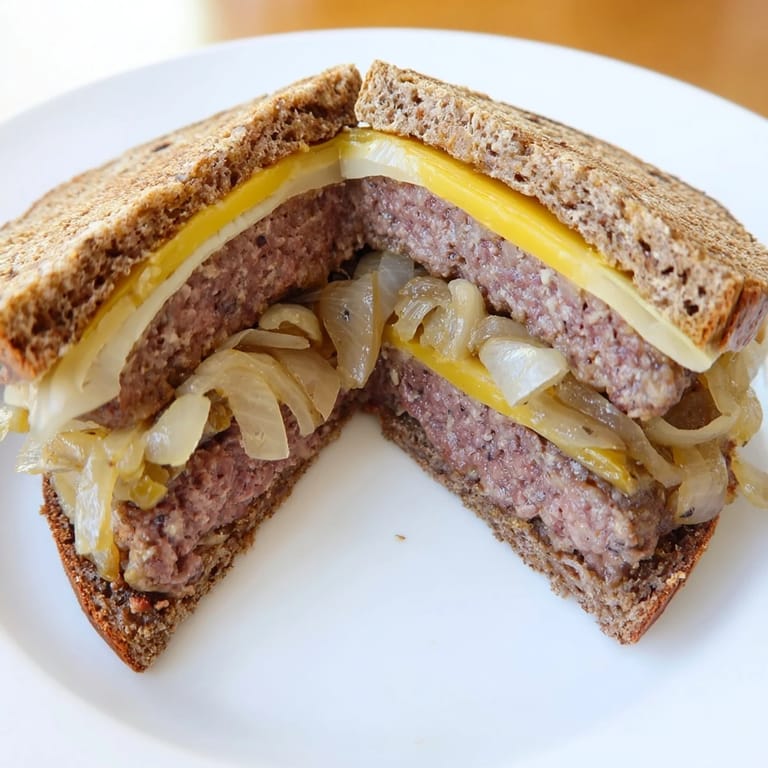
Save This is the kind of sandwich that reminds you why simple food, made well, never goes out of style. It's been a diner staple for good reason.
Recipe FAQs
- → What type of bread works best?
Rye bread is traditional for this sandwich, but sourdough also provides a great texture and flavor.
- → How do you caramelize the onions properly?
Cook sliced onions with butter and sugar over medium-low heat, stirring often until golden and deeply caramelized, about 20–25 minutes.
- → Can I substitute Swiss cheese?
Yes, cheddar or American cheese are good alternatives that melt well and add unique flavors.
- → How to ensure the beef patty stays juicy?
Use an 80/20 ground beef blend and avoid overcooking—2 to 3 minutes per side on medium-high heat is ideal.
- → What optional ingredients enhance flavor?
Dijon mustard or mayonnaise can be spread on the bread for added tang and creaminess.