 Save
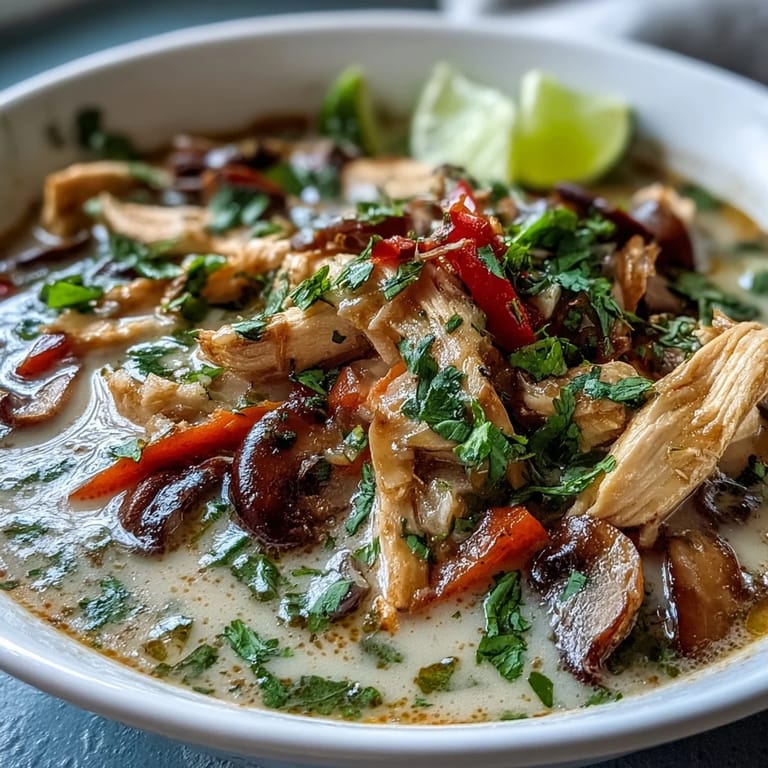
Save One rainy Tuesday, my friend showed up at my door with a jar of Thai red curry paste and a craving for something warm that tasted like the Bangkok street markets she'd visited years ago. We had chicken in the fridge, mushrooms getting soft in the crisper drawer, and within minutes of that first fragrant sip, I understood why this soup had become her comfort food. That afternoon taught me that the best meals aren't always complicated, they're just honest and full of intention.
I made this soup for my sister after she came back from Thailand with stories about night markets and temples, and watching her eyes light up when that first spoonful hit was something I'll never forget. She closed her eyes, breathed in the steam, and suddenly we were both transported somewhere warm and fragrant, just from the magic happening in a pot on my stove. That's when I realized this soup does more than nourish, it connects.
Ingredients
- Chicken breast or thighs (400 g): Thighs are more forgiving and stay juicier, but breasts work fine if you keep a close eye on the cooking time so they don't dry out.
- Mushrooms (200 g): Shiitake brings earthiness that elevates the whole bowl, though button mushrooms are reliable and more budget-friendly.
- Carrots (2 medium): Julienne them thin so they soften quickly and distribute their sweetness throughout the broth.
- Red bell pepper (1 small): Adds gentle sweetness and bright color that makes the soup feel alive.
- Baby spinach or bok choy (100 g, optional): These wilt in just a minute and add nutritional depth without any effort.
- Spring onions (2 stalks): Save these for garnish so they stay fresh and add a sharp, oniony bite at the end.
- Fresh ginger (1 tablespoon, grated): This is non-negotiable, the backbone of the flavor profile that makes everything taste authentic.
- Garlic (3 cloves, minced): Three cloves might seem modest, but it's enough to perfume the broth without overpowering the delicate coconut and curry.
- Lemongrass (2 stalks, optional): If you can find it, bruise the stalks and toss them in; they release an aroma that's almost floral and entirely Thai.
- Kaffir lime leaves (4, optional): These are the secret weapon, giving a citrus note that lime juice alone can't quite achieve.
- Red curry paste (2 tablespoons): Start here and taste as you go because curry pastes vary wildly in heat and saltiness between brands.
- Coconut milk (800 ml): Full-fat gives you luxury and body, but light works if you're watching calories and still tastes wonderful.
- Chicken broth (500 ml): Good quality matters here since it's half your liquid base, so use something you'd actually drink.
- Fish sauce (1 tablespoon): Trust this ingredient, that funky aroma transforms into umami depth that makes people ask what your secret is.
- Brown sugar (1 tablespoon): Just a whisper of sweetness to balance the heat and saltiness without making it dessert.
- Lime juice (1 lime): Squeeze it fresh right before serving to brighten everything and give it that final spark.
- Fresh cilantro: This is your finishing note, the garnish that makes it look like you know what you're doing.
- Fresh red chili (optional): Slice it thin and scatter it on top for heat-seekers, letting them control their own spice level.
- Lime wedges: These are essential, not optional, because a squeeze of lime at the table changes everything.
Tired of Takeout? 🥡
Get 10 meals you can make faster than delivery arrives. Seriously.
One email. No spam. Unsubscribe anytime.
Instructions
- Wake up your pot with aromatics:
- Heat your pot over medium heat and add a splash of oil, then immediately add ginger, garlic, and lemongrass if you're using it. You'll know you're timing it right when the smell fills your kitchen within about a minute, that's when you know the flavors are waking up rather than burning.
- Build flavor with curry paste:
- Stir in your red curry paste and let it cook for another minute, which toasts it slightly and mellows its raw bite. This step feels short but it's crucial, like the difference between good and extraordinary.
- Coat the chicken:
- Add your sliced chicken and stir everything together so each piece gets a thin coating of the fragrant paste. The chicken will look pale and raw at this point, which is exactly where it should be before the liquid goes in.
- Build the broth base:
- Pour in your coconut milk and chicken broth together, then add kaffir lime leaves if you're using them, plus your carrots, mushrooms, and red pepper. The liquid will look thin and separated at first, but as it heats it'll become creamy and unified.
- Gentle simmer to doneness:
- Bring everything to a gentle simmer and let it cook for 10 to 12 minutes, watching for the chicken to turn completely opaque and the vegetables to soften just enough to give when you press them with a spoon. Don't rush this, there's something meditative about watching the broth deepen in color.
- Season to balance:
- Stir in your fish sauce, brown sugar, and fresh lime juice, then taste and adjust because your palate is the final authority here. You're looking for a balance where no single flavor screams louder than the others, just harmony.
- Add delicate greens:
- If you're using spinach or bok choy, add it now and let it wilt for just 1 to 2 minutes, which keeps it fresh and slightly toothsome rather than turning into mush. Some people skip this step but the greens add nutrition and visual depth.
- Clean up and serve:
- Remove your lemongrass stalks and kaffir lime leaves because you don't want anyone biting into them by accident, then ladle the soup into bowls. The act of ladling matters, make sure each bowl gets a good balance of broth and solids.
- Finish with fresh elements:
- Top each bowl with spring onions, a generous handful of cilantro, maybe a scatter of sliced fresh chili, and serve with lime wedges on the side. Let people squeeze their own lime and adjust their own heat, it makes them feel like they're part of the cooking.
 Save
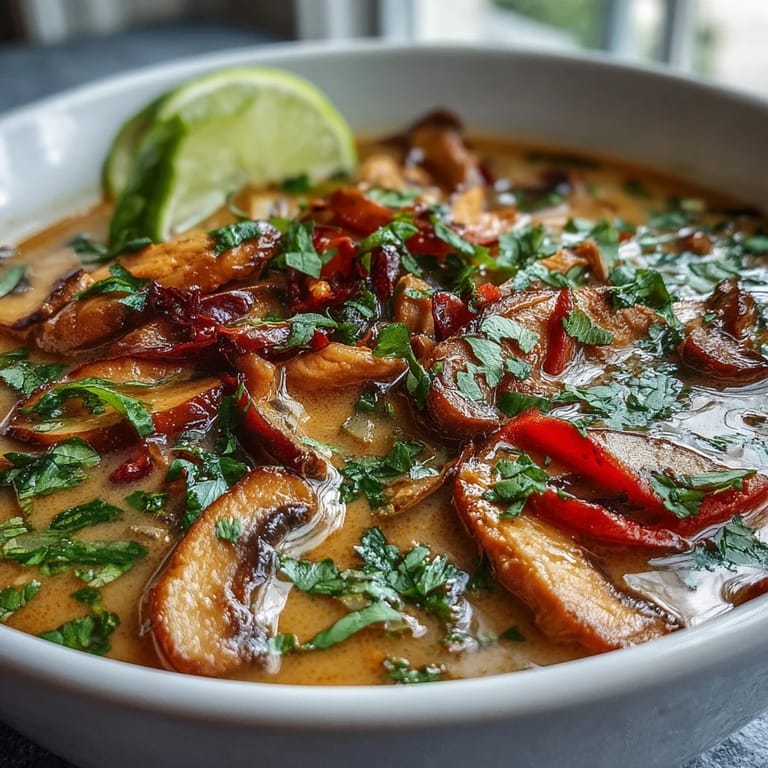
Save My neighbor smelled this cooking one afternoon and knocked on the door asking what that incredible aroma was, and instead of just describing it I invited her in to share a bowl. We sat at my kitchen table and she told me about a trip to Thailand she took thirty years ago, and suddenly this soup became a vessel for memory and connection. That's when I understood that good food is really just a bridge between people.
Why Coconut Milk Matters
When I first made Thai curry soup, I used lite coconut milk because I was counting calories, and the result felt thin and one-dimensional. Switching to full-fat coconut milk was a revelation, the richness carries the spices and creates that silky texture that makes you want to keep sipping even when you're full. The fat isn't the enemy here, it's the vehicle that makes everything taste the way it's supposed to.
Making It Your Own
This recipe is a base, not a rulebook, and once you make it once you'll naturally start playing with it. I've made it with shrimp when I wanted something lighter, with extra vegetables when I raided the farmers market, and even with a drizzle of coconut cream at the end when I wanted to feel fancy. Every time I adjust it, I learn something about how the flavors work together, and that's where cooking becomes less about following instructions and more about understanding your own palate.
Serving and Pairing Ideas
This soup is luxurious enough to serve as a main course, but it loves having rice or noodles alongside to soak up the broth. I've served it with jasmine rice for something familiar, with rice noodles for a lighter bowl, and even over cauliflower rice when I wanted to keep it vegetable-focused. A crisp white wine like Riesling or Gewürztraminer cuts through the richness beautifully, but honestly, this soup is so aromatic and complete that it stands perfectly on its own.
- Jasmine rice absorbs the coconut broth without competing for attention.
- Rice noodles give you textural contrast and make it feel like a complete one-bowl meal.
- A squeeze of fresh lime at the table is your chance to brighten and personalize each spoonful.
 Save
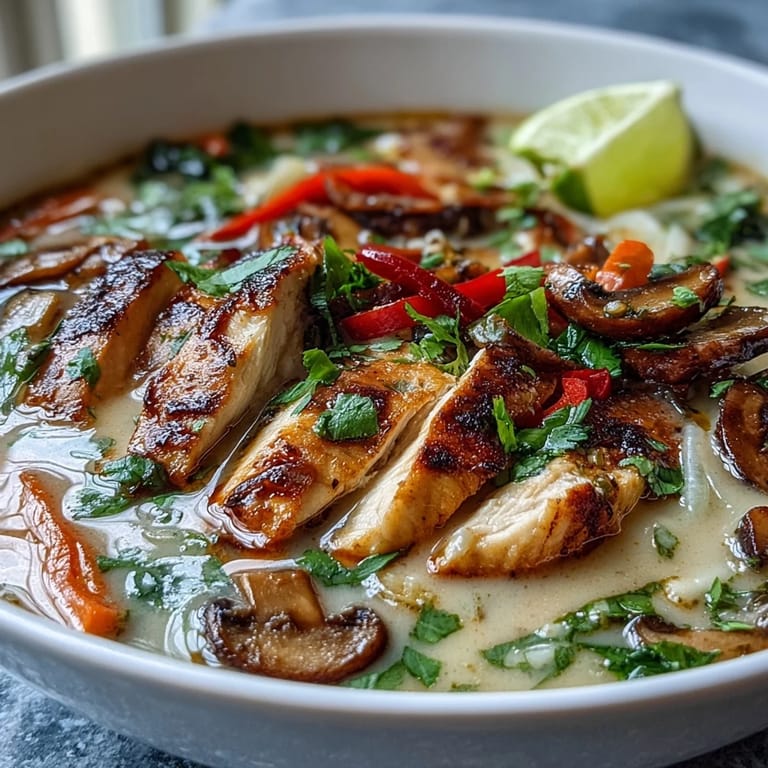
Save Every time I make this soup, I'm grateful for how it brings people together and how quickly it transforms simple ingredients into something that tastes like care. It's the kind of recipe that reminds you why cooking matters.
Recipe FAQs
- → Can I make this soup vegetarian?
Absolutely. Replace the chicken with firm tofu and use vegetable broth instead of chicken broth. Substitute fish sauce with soy sauce or tamari to maintain the savory depth.
- → How can I adjust the spice level?
The heat level depends on the red curry paste amount. Start with 1 tablespoon for mild flavor, or increase to 2-3 tablespoons for more intensity. You can also add fresh sliced chilies as garnish for extra kick.
- → Can I freeze this soup?
Yes, this soup freezes well for up to 3 months. Allow it to cool completely before storing in airtight containers. Reheat gently on the stove, adding a splash of coconut milk if needed to restore creaminess.
- → What can I serve with this curry soup?
Jasmine rice or rice noodles make excellent additions for a heartier meal. The soup also pairs beautifully with crisp white wines like Riesling or Gewürztraminer, which complement the aromatic spices.
- → Can I use light coconut milk?
Yes, light coconut milk works well if you prefer a lighter version. However, full-fat coconut milk provides a richer, more luxurious texture that better balances the bold curry spices.