 Save
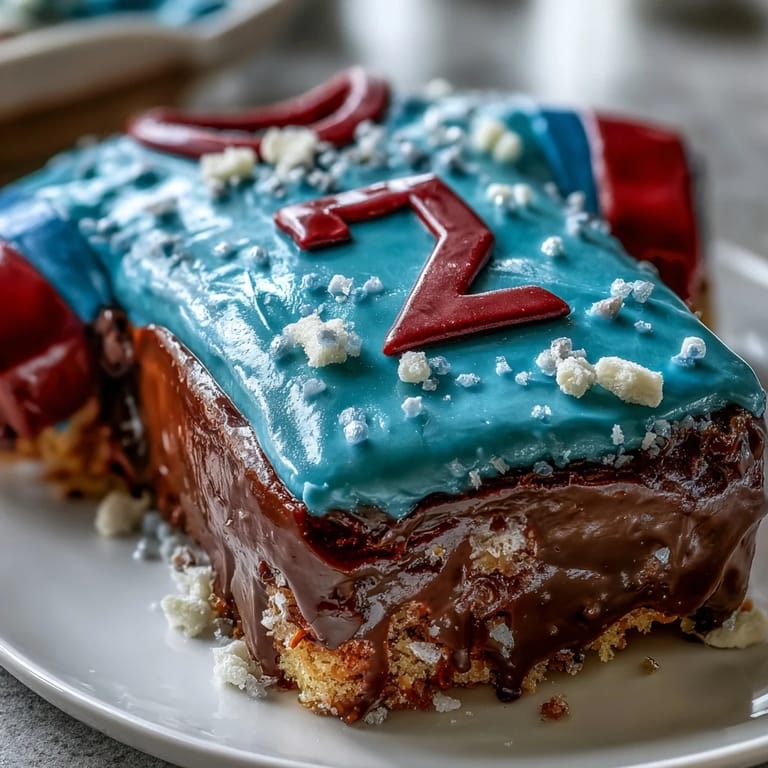
Save The sound of sneakers squeaking on the kitchen floor still echoes in my mind every time I make the Graduation Sports Jersey Cake. It wasn't a big game, but baking this cake for my nephew after his final track meet felt like a victory lap all its own. The aroma of vanilla cake mingling with the sweetness of fondant always takes me back to that sunlit afternoon of laughter and anticipation. There was an air of excitement, as if we were prepping a team jersey for a championship photo. By the end, sticky fingers and colorful frosting smears made for the best kind of mess.
Baking this cake for my cousin’s graduation party turned into a hilarious group effort—someone was dusting the counter with cornstarch while another debated which number would look best in fondant. We shared stories about our own sports mishaps and celebrated even the crooked stripes because they made the jersey truly one-of-a-kind. There’s something contagious about a kitchen buzzing with so much hands-on joy. Even the quietest introvert found themselves cheering as we piped on the final details. That cake couldn’t have felt more special if we’d ordered it from the world’s fanciest bakery.
Ingredients
- All-purpose flour: The backbone of the cake, sifted for extra fluffiness—I’ve learned not to skip this for a lighter crumb.
- Baking powder: Gives the cake its essential lift; always double check it’s fresh for maximum rise.
- Salt: Just enough to balance the sweetness and sharpen vanilla notes.
- Unsalted butter: Both in the cake and frosting, ensure it’s very soft for the smoothest texture.
- Granulated sugar: Creamed thoroughly with butter so the batter is airy, not dense.
- Eggs: Room temperature is key for easier blending—crack each into a bowl first to avoid shells in your masterpiece.
- Whole milk: I use it for richness, and alternate with flour to keep the batter supple.
- Vanilla extract: Use real vanilla if you can for that warm, bakery scent.
- Powdered sugar: For frosting—the finer it is, the silkier your buttercream slicks onto the cake.
- Fondant: Rolling fondant should be pliable but not sticky; work in food coloring with gloves to avoid rainbow hands.
- Food coloring gel: A few concentrated dabs go further than liquid and make those jersey colors pop.
- Edible black marker or black fondant: For names, numbers, and tiny stripes—don’t rush these details, they make the cake a showstopper.
- Cornstarch: Use just enough to dust your surface for rolling—too much dries fondant, too little and it sticks everywhere.
Tired of Takeout? 🥡
Get 10 meals you can make faster than delivery arrives. Seriously.
One email. No spam. Unsubscribe anytime.
Instructions
- Preheat and Prep:
- Set your oven to 350°F (175°C) and line a 9x13 inch pan with parchment paper, smoothing the corners so you’ll get clean cake edges later.
- Mix Dry Ingredients:
- Whisk together flour, baking powder, and salt—the scent always brings me back to classic bakery kitchens.
- Cream Butter and Sugar:
- Beat the butter and sugar until pale and fluffy; don’t rush this, the airiness is essential for a tender crumb.
- Blend in Eggs and Vanilla:
- Add eggs one at a time, scraping the bowl between each, then stir in vanilla for a hit of warmth.
- Combine Wet and Dry:
- Alternate adding flour mixture and milk, gently folding until the batter is smooth—overmixing can make it tough, so stop as soon as it comes together.
- Bake the Cake:
- Pour into your prepared pan, level the surface, and bake for 35–40 minutes until a toothpick comes out clean and the kitchen smells like celebration.
- Buttercream Magic:
- Beat the butter until creamy, then gradually add powdered sugar, milk, and vanilla—watch for the frosting to fluff up and hold soft peaks.
- Carve the Jersey:
- Once the cake is cool, use a serrated knife to shape it into a jersey—curving at the shoulders and softly indenting the sides for authentic arm holes.
- Crumb Coat:
- Spread a thin layer of buttercream over the whole cake; this locks in crumbs and helps fondant glide on smoothly. Chill for half an hour.
- Color and Roll Fondant:
- Dab food coloring into the fondant and knead until the color is vibrant; roll out on a cornstarch-dusted surface to get that perfectly smooth cover.
- Drape and Smooth:
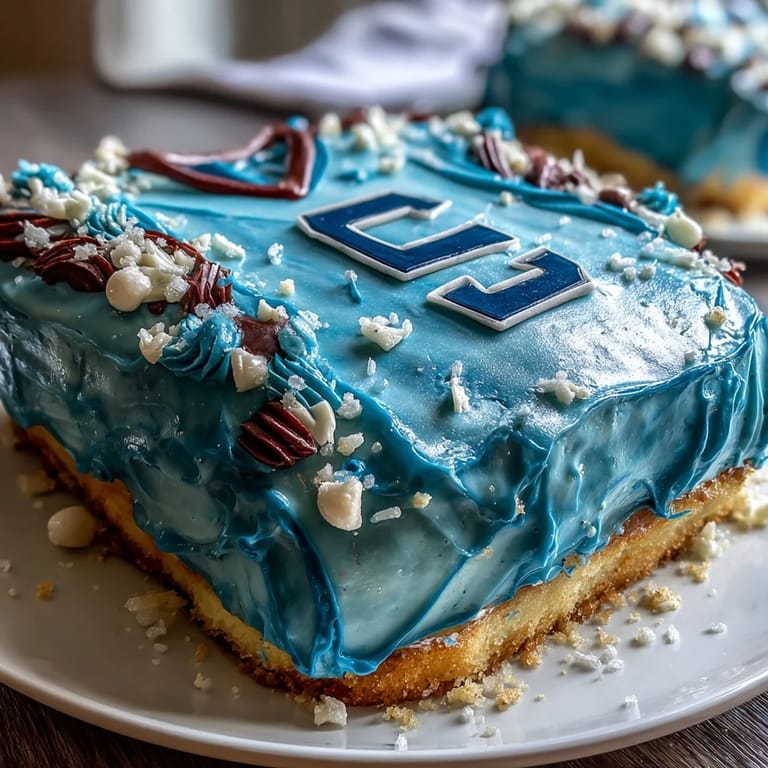
- Carefully lay the fondant over your cake, smoothing with your hands or a fondant tool—trim the edges for a jersey silhouette worthy of a victory lap.
- Add Details:
- Layer or draw on your team’s number, name, stripes, and graduation year—these finishing touches bring the whole scene to life.
- Display with Pride:
- Transfer to a serving board and let the celebration begin—the cake becomes the centerpiece, and the memories made stick around longer than the crumbs.
 Save
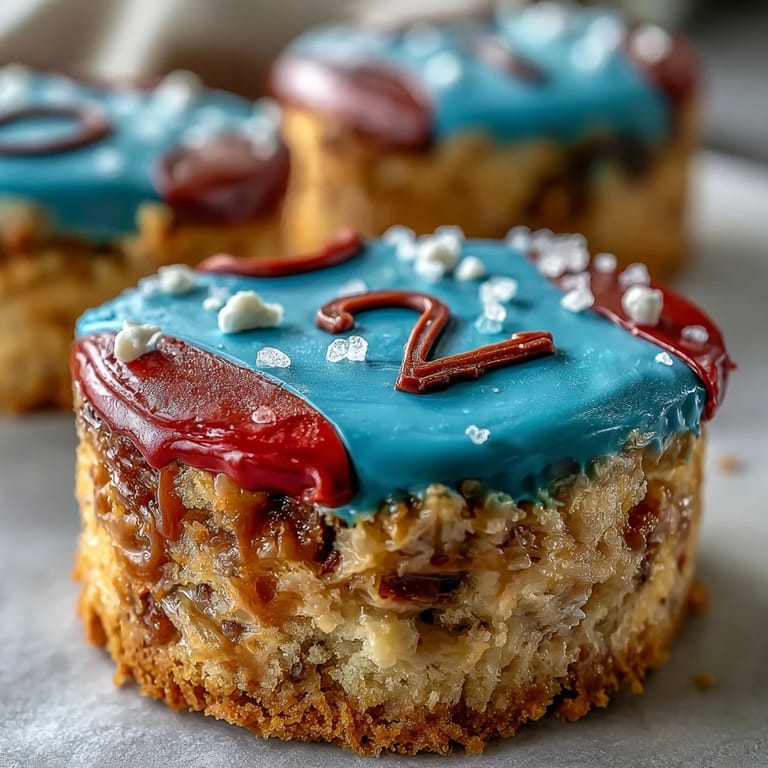
Save When we finally brought out the finished cake, it was like presenting a trophy—we actually clapped. For one small slice, everyone paused to admire the decorated names and how the colors matched school pride. Kids snuck an extra spoonful of frosting when they thought no one noticed. It was clear this cake had become part of the celebration, not just dessert. That's a win in any playbook.
Choosing Your Colors and Details
The best part is always deciding on the team jersey's colors together—sometimes there's lively banter about which shade of blue really counts as 'true blue.' I keep extra fondant and a couple food markers on hand, just in case anyone wants to add a last-minute mascot doodle. Personalizing the collar, number, and “name” stripe always makes the celebration feel extra heartfelt. Don’t be afraid to layer on the fun—a zigzag stripe or bold sleeve trim often wows the crowd. If you’re nervous about handwriting, cut numbers and letters from fondant using small cookie cutters.
Fondant Success Without Fear
If you’re new to fondant, it helps to picture covering the cake like tucking in a bedsheet—smooth from the center out and avoid stretching. Any creases or minor tears can often be disguised with an extra fondant stripe or a playful icing flourish. Gentle dustings of cornstarch keep fondant from gluing itself to your surface or hands. Food-safe gloves make coloring quicker and your fingers dye-free. Stick with gel colorings—they’re less messy and give brighter shades.
Serving and Celebrating Your Masterpiece
The first cut is always a showstopper, so savor the reveal. Pair the cake with cold milk or a sparkling toast and let the graduate have the first slice—it’s truly their moment. Even imperfections end up as beloved memories among the fanfare.
- Use a hot knife for clean slices through fondant.
- Keep any cut edges covered with plastic wrap to prevent drying if serving later.
- Don’t be shy—snap lots of photos before that first triumphant forkful disappears.
 Save
Save Graduation or not, this jersey cake captures the spirit of celebration—complete with laughter and crumbs. Here’s to sharing more sweet moments, one slice at a time.
Recipe FAQs
- → How do I carve the cake into a jersey shape?
After cooling, use a serrated knife to cut the cake into a rectangle with curves for shoulders and indents for armholes.
- → Can I use different team colors for the fondant?
Yes, tint white fondant with desired food coloring gel to match any team or school colors for a personalized touch.
- → Is it possible to make this dessert chocolate flavored?
Absolutely. Substitute ¾ cup of flour with unsweetened cocoa powder to create a chocolate version of the cake base.
- → How do I add realistic jersey details?
Use colored fondant or edible markers to draw stripes, numbers, the graduate’s name, and other decorations on the fondant surface.
- → What’s the best way to get smooth fondant covering?
Roll fondant on cornstarch-dusted surface to desired thickness, drape over crumb-coated cake, and smooth carefully before trimming excess.
- → How can I serve and store the finished cake?
Transfer to a serving board for presentation. Store any leftovers in an airtight container at room temperature for up to 2 days.