 Save
Save My sister called one Sunday afternoon asking if I could make chicken tenders for her kids' birthday party the next day. I'd made them dozens of times, but there was something about the panic in her voice that made me approach it differently—more intentionally. I pulled up a notepad and started writing down exactly what makes them turn out perfectly every single time, and that's when I realized how many little details actually matter. The buttermilk soak, the panko crust, the oil temperature—they all work together to create something that tastes homemade but feels like a treat. Now whenever I make these, I think about how the simplest dishes often bring the most joy to the table.
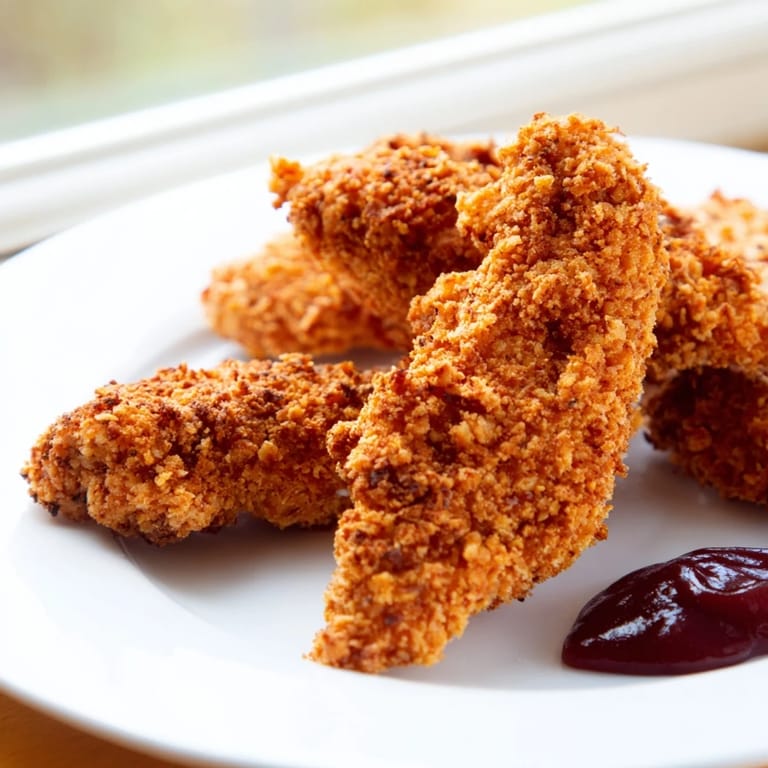
I remember standing in my friend's kitchen watching her teenage son eat his third tender straight off the cooling rack, dipping it in barbecue sauce before it had even cooled down completely. That moment told me everything—this recipe works because it delivers exactly what people crave: crispy outside, juicy inside, no pretense. There's something almost magical about feeding people food that makes them go quiet and focused on just eating.
Ingredients
- Chicken breast fillets: Cut them into strips roughly the same thickness so they cook evenly; thinner strips fry faster and get crispier at the edges.
- Buttermilk: This is the secret to tenderness—the acidity and fat content break down the proteins so the chicken stays juicy even after frying.
- All-purpose flour: Creates the base layer that helps the egg and breadcrumbs stick; don't skip this step or your coating will fall off.
- Panko breadcrumbs: These larger flakes give a better crunch than regular breadcrumbs and don't compress as much during frying.
- Smoked paprika: Adds color and subtle depth that regular paprika doesn't quite deliver; it's worth seeking out.
- Vegetable oil: Use something neutral with a high smoke point—canola or light vegetable oil work perfectly.
Tired of Takeout? 🥡
Get 10 meals you can make faster than delivery arrives. Seriously.
One email. No spam. Unsubscribe anytime.
Instructions
- Make the marinade and soak the chicken:
- Whisk buttermilk with salt, pepper, garlic powder, and paprika in a bowl. Submerge the chicken strips and let them sit—even 30 minutes makes a difference, but if you have time, marinate up to 2 hours in the fridge for maximum tenderness.
- Set up your breading station:
- Arrange three shallow bowls: one with flour mixed with salt, pepper, and smoked paprika; one with beaten eggs; and one with panko breadcrumbs. Having everything ready before you start prevents the panicked moment of wet hands reaching for the wrong bowl.
- Coat each tender:
- Take a marinated strip, let excess buttermilk drip back into the bowl, then dredge it in flour until fully coated. Shake off excess, dip in egg, then roll it in panko, pressing gently so the breadcrumbs stick. Set each one on a clean plate—don't let them touch or they'll stick together.
- Heat the oil to exactly the right temperature:
- Pour oil into a deep skillet to about 2 inches deep and heat to 350°F. If you have a thermometer, use it—if not, test with a tiny piece of bread; it should turn golden in about 60 seconds. Oil that's too cool makes greasy tenders; too hot and the outside burns before the inside cooks.
- Fry in batches:
- Carefully lay tenders into the hot oil without crowding the pan (work in two batches if needed). Fry 3–4 minutes per side until deep golden brown and cooked through. You'll feel when they're ready—they'll float and feel crispy when you move them with tongs.
- Drain and serve:
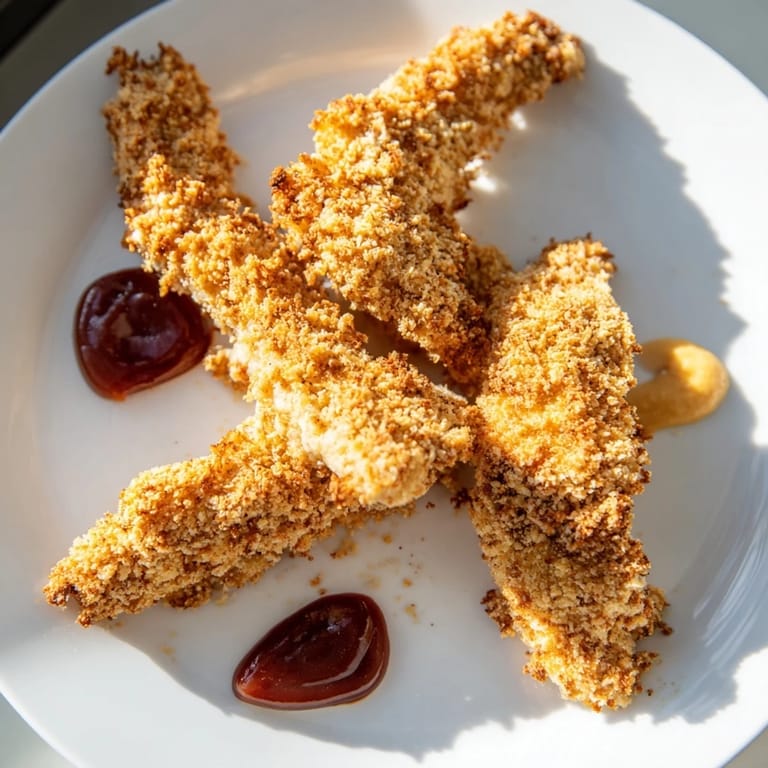
- Transfer to a wire rack or paper towels to drain excess oil. Serve immediately while they're still warm and crispy, with your choice of sauces on the side.
 Save
Save The first time I made these for people who actually cared what they were eating, I was nervous. But then I watched someone's face change from skeptical to delighted with the first bite, and I realized that good food doesn't need to be complicated—it just needs to be done right. That's when chicken tenders stopped being a shortcut dinner and became something I'm genuinely proud to serve.
The Buttermilk Trick
Buttermilk isn't just a binding agent here—it's doing serious work. The acidity gently tenderizes the chicken while the fat keeps it moist during the high-heat frying process. I once tried substituting yogurt to save a trip to the store and the texture was noticeably different, less tender and slightly dry. Now I always keep buttermilk on hand because this one ingredient is what separates homemade chicken tenders from the frozen kind.
Panko Versus Regular Breadcrumbs
The difference between panko and regular breadcrumbs might seem tiny, but it's the difference between a tender that stays crispy for hours and one that gets soft and dense within minutes. Panko crumbs are larger and fluffier, so they fry up airier and maintain that satisfying crunch. If you only have regular breadcrumbs, pulse them in a food processor for a couple of seconds to create more texture, but honestly, panko is worth having in your pantry.
Make It Your Own
This recipe is a solid foundation, but it's also flexible enough to experiment with. The marinade and breading are both places where you can add your own flavor without changing the technique. Try mixing in cayenne or hot sauce for heat, or dried herbs like thyme or oregano for something more savory.
- For a healthier option, bake the breaded tenders at 425°F for 18–20 minutes, flipping halfway through and lightly spraying them with oil first.
- Leftover tenders keep for three days in an airtight container and reheat beautifully in a 325°F oven for about 8 minutes.
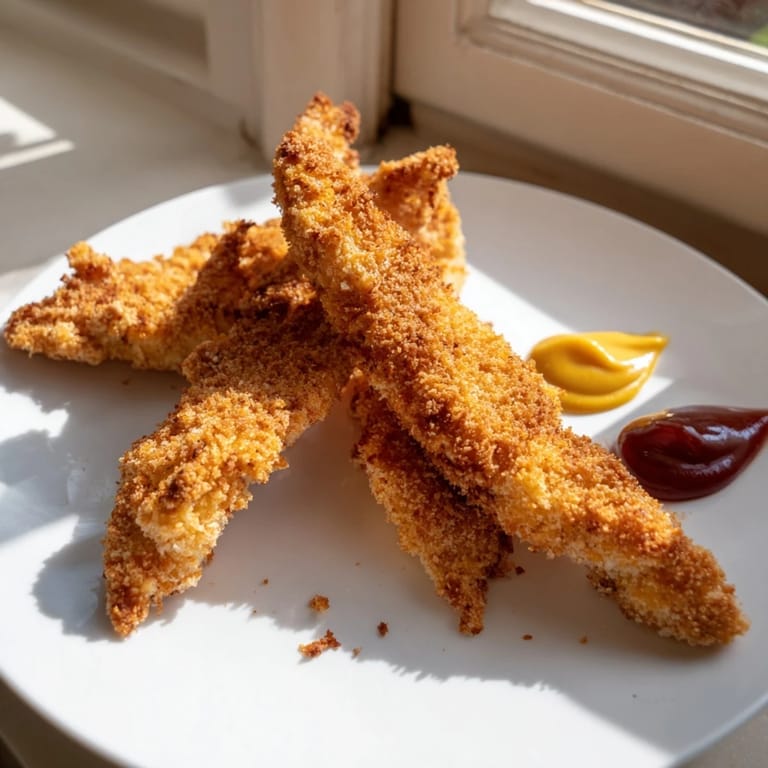
- Serve with something acidic like lemon wedges, pickles, or your favorite sauce to cut through the richness and brighten each bite.
 Save
Save Chicken tenders have this special power—they can be a quick lunch, a party solution, or comfort food depending on the day and who you're feeding them to. Once you master this version, it becomes the one you return to.
Recipe FAQs
- → How long should the chicken marinate?
Marinate the chicken strips for at least 30 minutes up to 2 hours to ensure tenderness and enhanced flavor.
- → What is the best oil temperature for frying?
Heat the oil to 175°C (350°F) to achieve a perfectly crispy and golden exterior without overcooking the chicken inside.
- → Can I bake the chicken strips instead of frying?
Yes, baking at 220°C (425°F) for 18–20 minutes with a light oil spray gives a crispy finish while reducing oil usage.
- → What sauces pair well with these chicken strips?
Barbecue sauce and honey-mustard sauce complement the crispy chicken strips with sweet and tangy notes.
- → How can I add extra flavor to the breading?
Enhance the breading by adding cayenne pepper or dried herbs like thyme or oregano to the flour mixture.