 Save
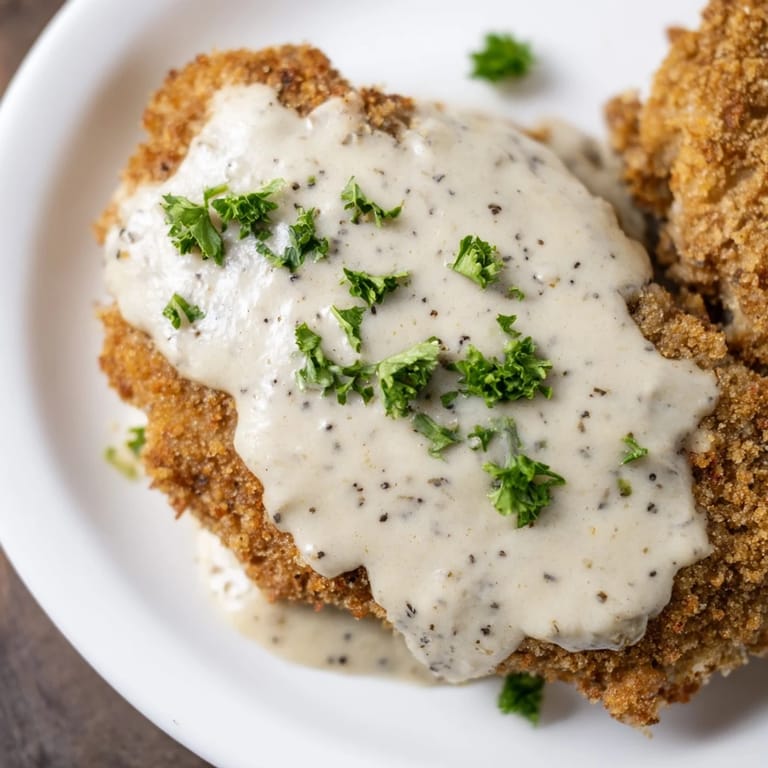
Save My grandmother kept a cast-iron skillet on her stovetop that never left, always ready for chicken fried steak. The first time I watched her make it, I was struck by how simple the ritual was—flour, egg, breadcrumbs, then into hot oil with a satisfying sizzle that filled the kitchen with warmth. She'd plate them golden and crisp, top with silky gravy, and suddenly dinner felt like an event. That skillet taught me that some of the best comfort food comes not from complexity, but from respecting each ingredient and knowing exactly when to stop fussing.
I made this for my roommate on a cold Tuesday night when she'd had a rough week, and watching her take that first bite—how her shoulders relaxed, how she closed her eyes for a moment—reminded me why comfort food matters so much. The creamy gravy pooling over the golden steak somehow made her kitchen feel less like an apartment and more like home. Food that makes people feel cared for is worth the small effort it takes.
Ingredients
- Beef cube steaks (4, about 150–180 g each): Already tenderized by the butcher, these are the secret to why this dish works so well—no need to pound them yourself, though I always pat them dry so the coating clings properly.
- All-purpose flour (1 cup): This is your base layer and needs the seasoning blended right in so every bite has flavor.
- Eggs (2 large) and milk (1 cup total for mixture): The egg wash is what makes the breadcrumbs stick and creates those crispy edges; don't skip whisking them together.
- Breadcrumbs (1 cup): Use panko if you want extra crunch, but plain breadcrumbs work beautifully too.
- Garlic powder, onion powder, paprika (1 tsp each): These three are the holy trinity that gives the coating its savory depth—they're not optional, they're essential.
- Cayenne pepper (1/2 tsp, optional): A pinch of heat cuts through the richness of the gravy and makes the whole dish come alive.
- Salt and black pepper: Taste as you go; under-seasoning the coating means under-seasoning the entire dish.
- Vegetable oil for frying: You need enough to come up the sides of the meat—shallow frying won't give you that golden crust you're after.
- Pan drippings or butter (3 tbsp) and flour (3 tbsp): These create the roux for your gravy; the pan drippings add flavor you'd lose otherwise.
- Whole milk (2 cups for gravy): Don't use skim here—the fat is what makes the gravy silky and rich.
- Fresh parsley (2 tbsp, optional): A small garnish of green adds visual warmth and a subtle freshness that balances the richness.
Tired of Takeout? 🥡
Get 10 meals you can make faster than delivery arrives. Seriously.
One email. No spam. Unsubscribe anytime.
Instructions
- Prep your steaks and set up your station:
- Pat those cube steaks completely dry—moisture is the enemy of a good crust. Arrange your three bowls in a line: seasoned flour, beaten eggs mixed with milk, and breadcrumbs, so you're moving smoothly from one to the next.
- Bread each steak with intention:
- Dredge in flour first, making sure every surface is coated, then dip into the egg mixture, then press gently into breadcrumbs so they adhere without bunching up. Let each steak rest for a minute after breading so everything sets.
- Heat your oil properly:
- You want the oil hot enough that it sizzles immediately when the steak hits it, but not so hot it burns the outside before the inside cooks. Medium-high is your target; test with a breadcrumb and wait for it to tan immediately.
- Fry until golden and crisp:
- Three to four minutes per side, and don't move them around—let them sit and develop that beautiful crust. You'll know they're ready when the edges look deep golden and the steak is cooked through.
- Build your gravy with the browned bits:
- Pour off excess oil, leaving about 3 tablespoons with all those flavorful brown bits stuck to the pan. Whisk in flour to create a paste, then slowly add milk while whisking to avoid lumps, scraping the bottom constantly.
- Cook the gravy until it coats a spoon:
- This takes about three to five minutes of gentle whisking—you'll see it thicken as the flour cooks out. Taste and adjust salt and pepper until it feels right, remembering that the steaks are already seasoned.
 Save
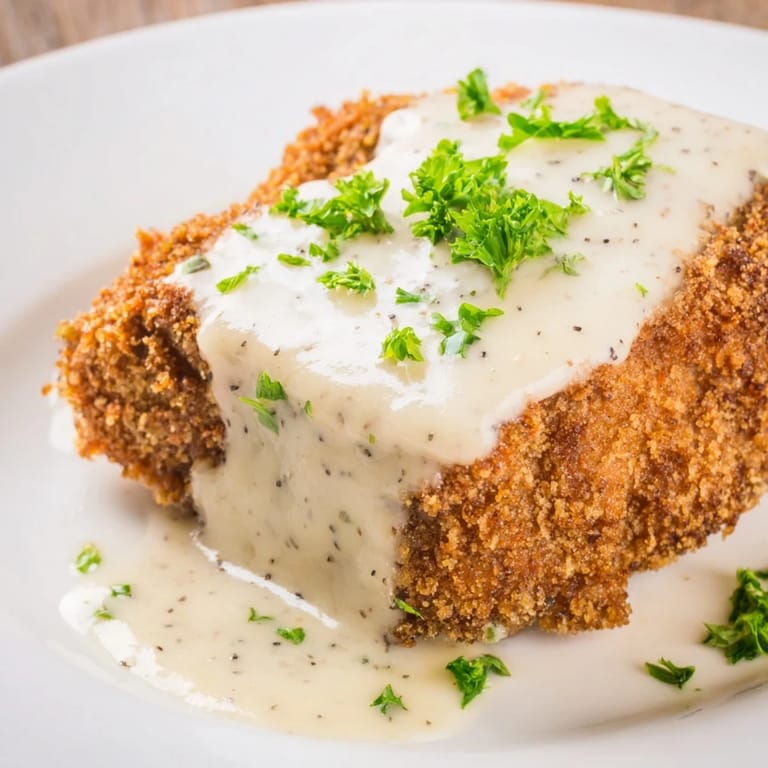
Save There's a moment right when you plate this dish that feels ceremonial, even for a weeknight dinner. The golden steak, the cream-colored gravy pooling underneath, steam rising slightly—it's a small thing, but it's the kind of small thing that reminds us why cooking matters. Every time I make it, I remember my grandmother not because I'm trying to recreate the past, but because the care in the process feels like its own kind of love language.
The Coating Philosophy
Breading works because of layers—each one serves a purpose, and skipping any of them changes the outcome. The flour provides grip for the egg, the egg seals everything and creates moisture that helps the breadcrumbs stick, and the breadcrumbs fry up to form that satisfying crust. I've seen people try to shortcut this by dipping straight into breadcrumbs, and while it technically works, you lose that structural integrity that makes the coating stay crispy instead of separating from the meat. The three-step breading process exists because it works, not because it's tradition.
Timing and Temperature Matter
When oil reaches the right temperature, you'll hear the sizzle before you see it, and that's your sign to proceed. Too cool and you get greasy, dense meat; too hot and the outside burns before the inside finishes cooking. Medium-high heat on most stovetops is right, though every stove is different—the first steak is partly about learning your setup. Once you nail that temperature, the steaks cook through in minutes, which is why this dish is fast enough for a weeknight but impressive enough for guests.
Gravy as the Final Touch
The gravy is where the dish transforms from good to unforgettable, and it's built directly from the pan you just cooked in. Those browned bits clinging to the bottom aren't burnt—they're concentrated flavor, and whisking them into the milk creates a sauce that tastes like it took hours. If you're nervous about lumps, remember that whisking constantly while you add the milk gradually is the entire secret; take your time and trust the process. Smooth, creamy gravy that coats the back of a spoon is achievable, and once you make it, you'll never want canned versions again.
- If your gravy breaks or gets lumpy, strain it through a fine mesh and start fresh rather than trying to fix it in the pan.
- Smoked paprika in the gravy adds depth that regular paprika can't match, so consider it even if you skip the cayenne in the coating.
- Leftover gravy keeps in the fridge for three days and reheats beautifully over medium heat with a splash of milk to restore creaminess.
 Save
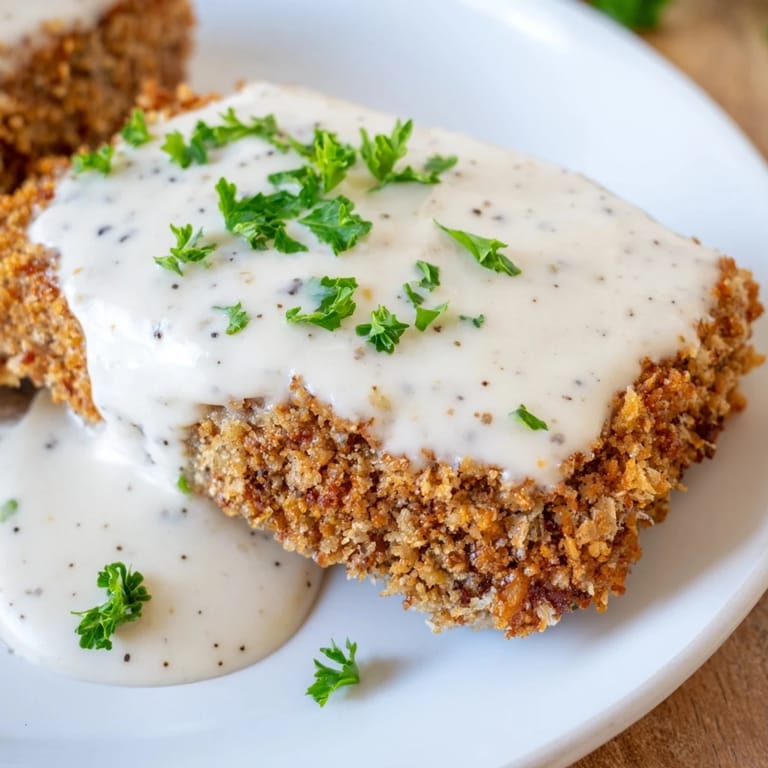
Save Chicken fried steak belongs on tables where people linger, where conversation flows, where comfort is measured in full plates and satisfied sighs. Make it when you want to care for someone through food.
Recipe FAQs
- → How do I ensure a crispy coating on the steak?
Dredge the steak thoroughly in seasoned flour, then dip in egg and milk mixture before coating with breadcrumbs. Fry in hot oil allowing enough space for even cooking.
- → What spices enhance the breading?
Garlic powder, onion powder, paprika, cayenne pepper, salt, and black pepper create a flavorful seasoning mix for the coating.
- → Can I substitute the milk in the gravy?
Whole milk provides creaminess, but you can use alternatives like almond or oat milk for different dietary needs, adjusting thickness accordingly.
- → What temperature should the oil be for frying?
Heat the oil over medium-high heat until it covers the pan bottom by about 1 cm and is hot enough to sizzle the coating without burning.
- → How do I make the gravy smooth without lumps?
Whisk the flour into the pan drippings before gradually adding milk while stirring constantly to prevent lumps and to achieve a creamy consistency.